-

“励学崇教”新时代高质量外语人才培养高端学术研讨会
-

基础教育论坛圆桌论坛
-

2025级新生见面会
-

区域国别学学科建设座谈会
-
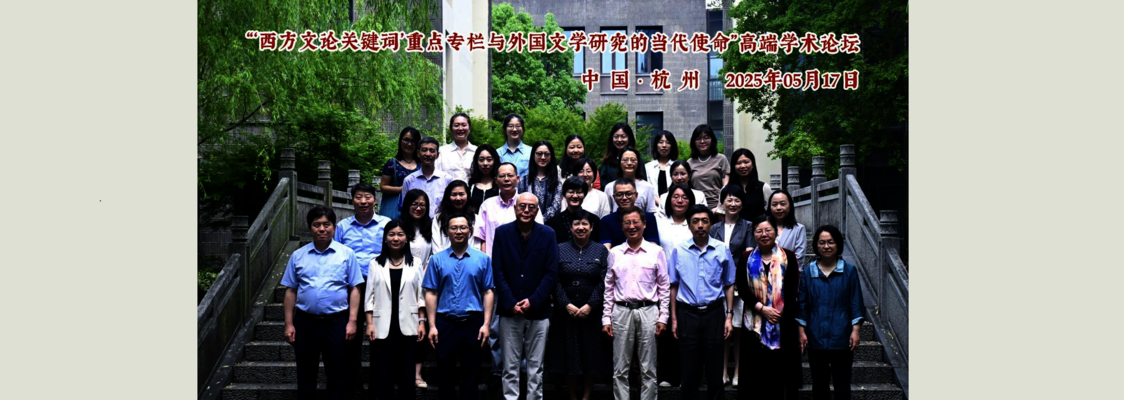
“‘ 西方文论关键词’ 重点专栏与外国文学研究的当代使命” 高端学术论坛
- Corpus-Driven and AI-Assisted Approaches in
- 语际间性与翻译
- 刻意隐喻理论视域下的企业话语研究
- 狄更斯小说的视觉叙事与贺加斯传统
- 中国式现代化背景下的中华民俗文化译介研究
- 杭州与沈熏:一个殖民地知识分子的中国体验
- 日本文学传统精神之再思考
- 中韩关系的现状与未来展望
- Emotional Asymmetry: How Weibo Celebrities N
- 区域国别研究典型范例——中美大豆百年战争
- 比较文学文献学:生活世界是永无讹误的校勘依据
- International Education in a Globalized Worl
- 从龙虾智能体到AI4S:科研范式的智能进化与实践
- Mobility In American Painting
- 如何撰写学术论文和资政报告
- Charlotte Brontë’s Jane Eyre and Its Reader
- 工具、技术与人文
- 学术论文的写作与投稿问题
- 会议通知 || 全球文明倡议下的文学伦理学批评:
- 我们为什么要研究非洲哲学?
时间:2026年6月14日18:30
地点:恕园19-205
主讲内容:
The exponential advancement of technology has spurred the rapid adoption of corpora and generative AI tools (e.g., chatbots) in language research and teaching. While studies have demonstrated the significant benefits of both technologies, they have also revealed distinct strengths and limitations, showing that their effectiveness is highly dependent on factors like individual learner differences, learning contexts, and task types. Drawing on published studies and the speaker's own research/experience, this talk explores the rationale and methods for integrating these two powerful technologies. It will first briefly outline their respective strengths, limitations, and the compelling reasons for their integration. The talk will then review existing integrative approaches and introduce several emerging corpora and corpus tools that successfully integrate and leverage AI features. Concrete examples of learning and research activities will be provided to illustrate how these integrated approaches can enhance effectiveness. Finally, a comparative analysis of results from different AI chatbots will be presented to highlight their respective strengths in corpus-based tasks.
主讲人简介:
Dr. Dilin Liu is Professor Emeritus of Applied Linguistics/TESOL in the English Department at the University of Alabama, USA. His research focuses on the description, learning, and teaching of English grammar and vocabulary using cognitive- and corpus-linguistic approaches. He has published extensively with over 100 publications, including seven books and numerous journal articles/book chapters. His articles have appeared in more than 30 different SSCI journals in linguistics/applied linguistics.
 官方微信
官方微信
 官方微博
官方微博